


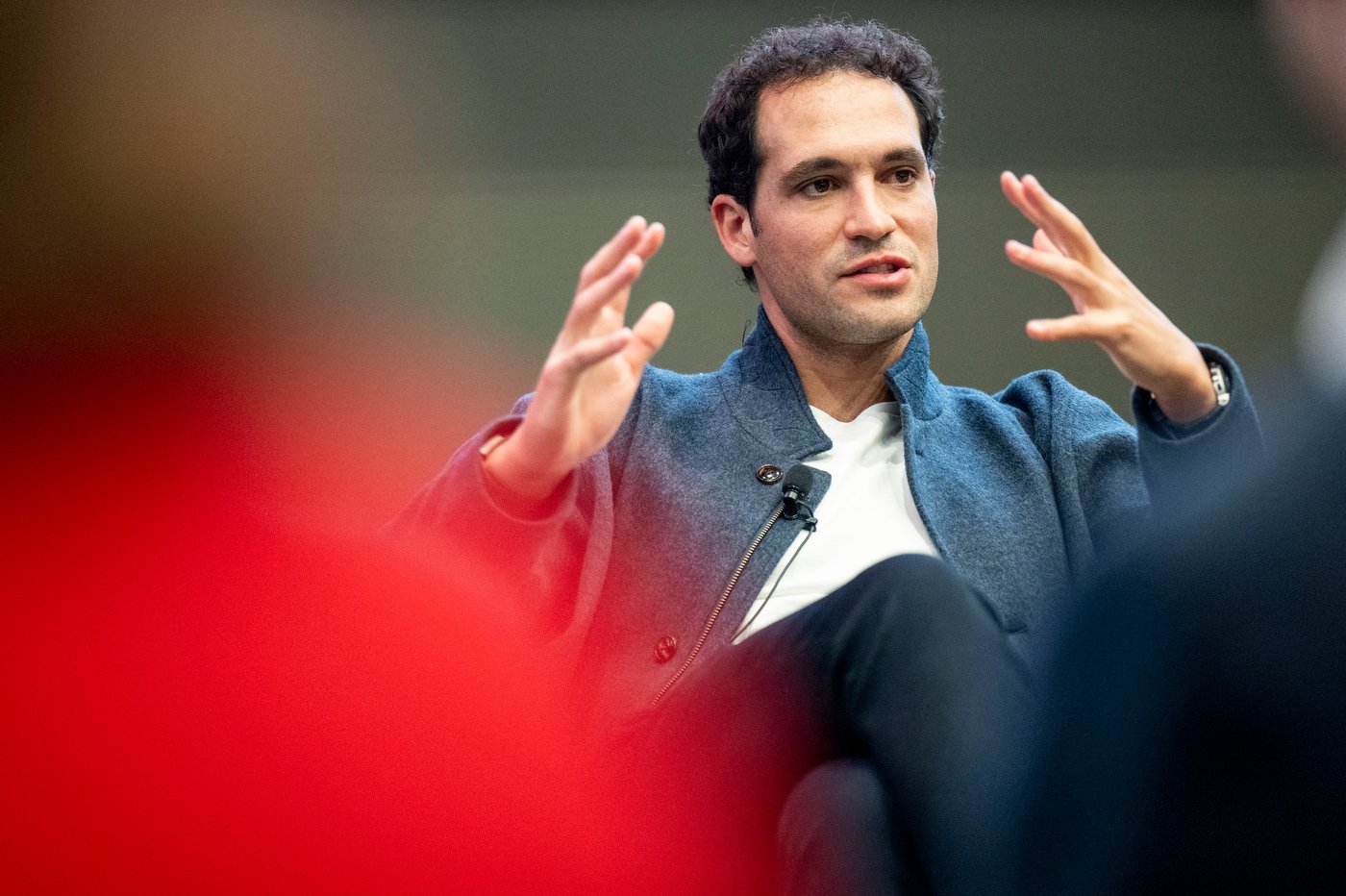
As a 22-year-old CEO just launching his technology with high quality health data to bolster fitness and overall wellness. His initial targets were professional athletes who place a high value on good data to help them train.
But when he reached out to people to join his team or invest in the company in the early 2010s, he was met with a lot of disinterest.
“I would go meet with people and they would tell me it wasn’t a good idea or that they didn’t want to work with me,” Ahmed recalled Thursday as he addressed an audience at the EXP research center on Northeastern University’s Boston campus.
It was demoralizing, but Ahmed’s obsession with health technology wouldn’t allow him to quit. He knew the wearable market could be key for athletes looking to improve their game. He developed a resilience that allowed him to push through the constant rejections and negative feedback, he said, and eventually he found his people.
Today, more than 500 in the past ten years, he said.
Northeastern fourth year business student Sam Iannone, who moderated the fireside with Ahmed and is the symbolic “Mayor of Huntington Avenue,” is among that cohort. He was twice a co-op at Whoop.
Ahmed told the audience that he was inspired to start the company while he was a student athlete at Harvard. An avid Squash player, he wanted to gain more insight into the extent to which his workouts were helping him to perform better.
So he started researching, reading hundreds of medical journals on the subject. As a student of government concentration, he admitted to being a little out of his depth, but he became obsessed.
“It became something he couldn’t stop thinking about,” he said.
After an internship at a finance company that didn’t pique his interest, Ahmed decided to go all in on health tech.
While still at Harvard, he enrolled in a class at MIT’s business school where he read up on physiology research — the study of how parts of an organism function – and wrote up his business plan for what would eventually become Whoop.
Ahhemd said one of the keys to his success was that he started the company by targeting a very specific group — professional athletes.
“Our initial target market was 10,000 people in the world. You can’t have a much smaller market than that,” he said.
After Whoop secured buy-in from that group, it was able to expand more broadly. Ahmed encouraged student entrepreneurs to adopt a similar approach with their businesses.
As a leader, Ahmed said he tries to put the needs of his employees above his own. It’s a key principle that guides how he approaches projects and challenges.
“The healthy thing for me about this is that it gets you out of your head, “he said. “When you take an approach of thinking that challenges, problems are going to bring out the best in you, you’re going to overcome these things and learn something from them.”
Ahmed acknowledged that there are bound to be new challenges the years ahead as AI and other disruptive technologies influence healthcare, but he doesn’t believe this will erase the need for the human touch.
“As the world gets more artificial, there will be a strong movement toward being real,” he said. “I can see that happening in physical places.”
Ethan Menezes, a fourth year math and science major, said he enjoyed the fireside chat and Ahmed’s perspective, noting that, for him, the most interesting takeaways from the tech CEO were the importance of having humility and high intensity in your work, and his thoughtful approach to leadership.
“He lives life in service of the people he is interacting with,” Menezes said. “That is something I look to do as well.”
For Rae Yang, a fourth year computer science and music major, it was Ahmed’s take on the importance of human connection as AI becomes more popular.
“I think sometimes hearing big founders talk about AI, they can be a little out of touch, but I think it was really nice to hear the point about people wanting to connect,” she said.
