


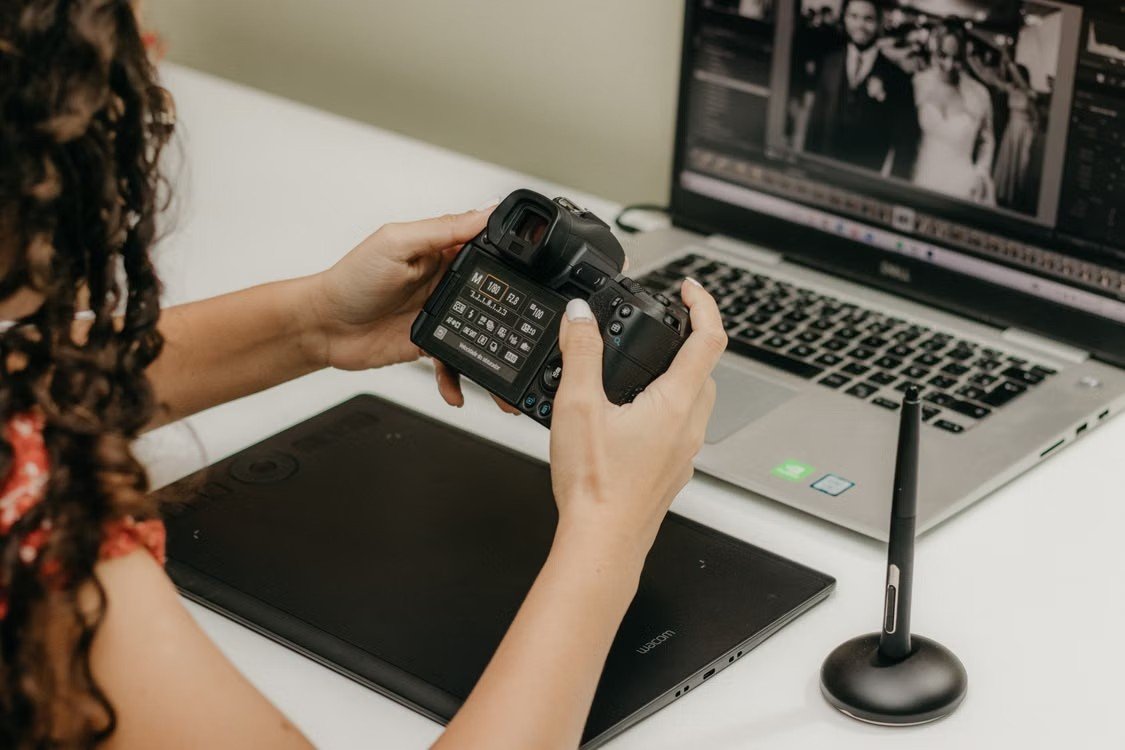
Before purchasing, agencies should review their cameras’ specifications and select products that meet the requirements of their social media videos.
Modern cameras offer features such as high-resolution recording, autofocus systems, adjustable exposure settings, and support for interchangeable lenses. However, selecting equipment should involve more than comparing technical specifications.
Agencies need to consider the type of content they produce, shooting environments, equipment compatibility, and the experience of their production teams.
For example, a lightweight camera may be suitable for outdoor projects, while a more advanced setup may be needed for controlled studio production.
Maintaining equipment and training employees to use its features can also help reduce technical problems during recording sessions.
Efficient File Transfer and Data Management
Once recording is complete, creative teams need to transfer footage and other files to editing systems.
This process can become time-consuming when agencies work with large video files or multiple recording devices.
Using compatible high-speed card readers, appropriate cables, and reliable storage devices can help improve transfer efficiency. Agencies should also establish a consistent process for importing and organizing digital files.
For example, project folders can be arranged according to client names, recording dates, content types, or production stages.
Clear file naming conventions make it easier for editors and other team members to locate the correct materials.
It is also important to verify that files have transferred successfully before deleting them from their original storage devices.
